
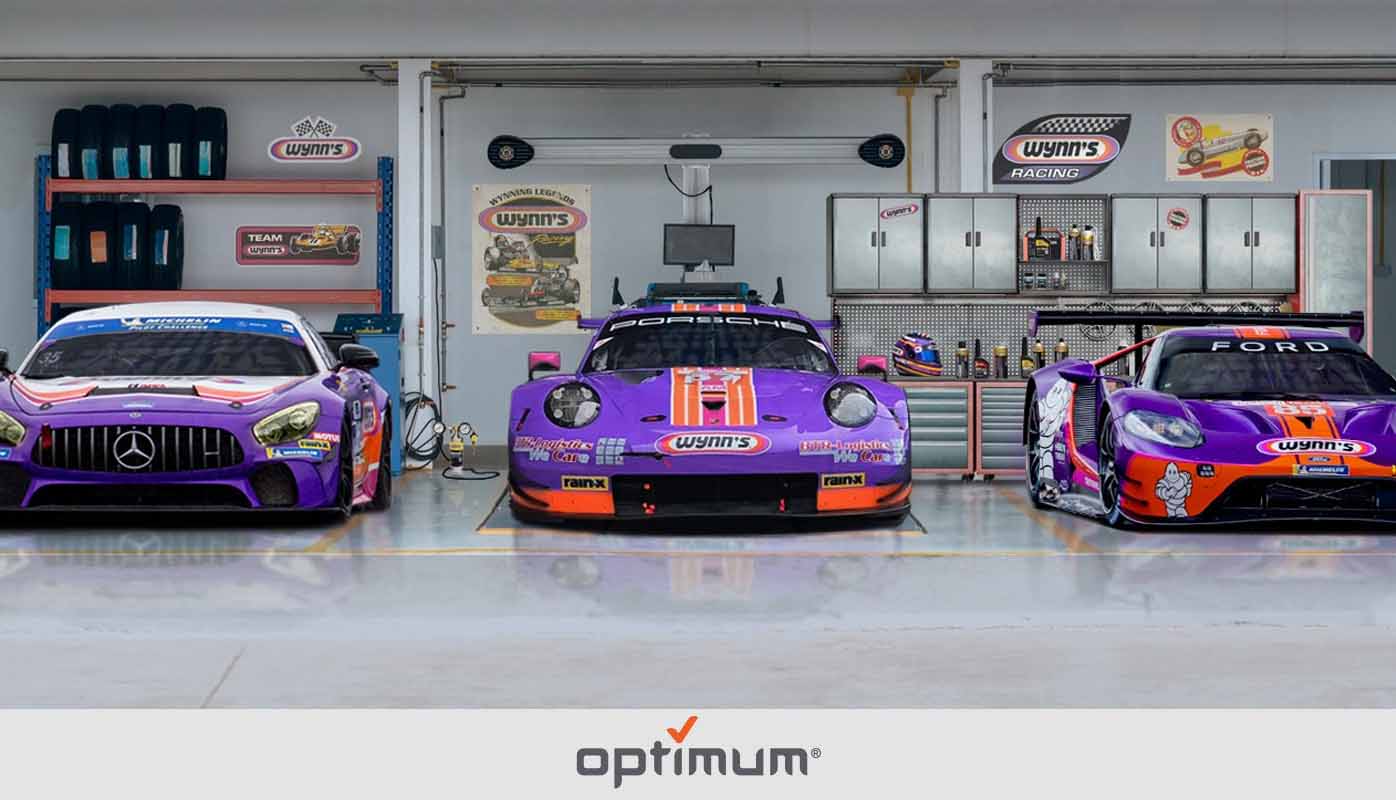
In the automotive distribution world, your software should be a high-performance engine, not a legacy anchor. SW Wynns was trapped by a rigid, “all-encompassing” industry platform that promised a 360-degree view but overlooked the daily reality of their warehouse. This high-priced “industry standard” left their team filling the gaps with manual data entry and a web of spreadsheets just to maintain basic daily operations. By trading that clunky, “full-circle” interface for Optimum, they finally broke out of the box and consolidated their entire operation into a unified source of truth that actually moves.
The Challenge: Fragmented Data and Inventory Blind Spots
Southwestern Wynns distributes specialized automotive chemicals—engine treatments, fuel additives, and fluid care—to jobbers and dealerships across the Southwest. When Will and Tina Rasmussen stepped into their roles as owners, they inherited a patchwork of disconnected tools. Managing routes, customer accounts, and a complex SPIFF incentive program meant jumping between systems that didn’t talk to each other.
The problems weren’t dramatic—they were chronic. SPIFF payouts required hours of manual reconciliation each pay period. Truck inventory was tracked on paper, which meant discrepancies only surfaced after the fact. QuickBooks entries were duplicated by hand. Every week, time that should have gone toward growing the business went toward keeping the operation from falling apart.
The root of the problem came down to two things: the SPIFF program and the inventory. Neither bucket was reliable. Incentive calculations depended on manual inputs that were easy to miscalculate and hard to audit — meaning reps were regularly questioning their own paychecks. Truck inventory lived on clipboards, not in a system, so the numbers ownership saw rarely matched what was actually on the road. You can’t run a route-based business on guesses and goodwill.
| Before Optimum | After Optimum | |
|---|---|---|
| SPIFF Management | Manual calculations each pay period. Frequent errors led to rep disputes and owner headaches. | Fully automated. Rules set once by product or margin. Payouts calculated instantly and sent via Zelle, Venmo, or Pay Card. |
| Truck Inventory | Paper-based counts reconciled at end of day. Shrinkage and discrepancies went undetected for days. | Live visibility across all trucks and warehouse locations. Every field sale updates stock in real time. |
| QuickBooks Sync | Double-entry by hand. Invoice data re-keyed into accounting at end of day, creating lag and error risk. | Bi-directional sync. Invoices push to QuickBooks automatically the moment they’re generated in the field. |
| Route Sales Visibility | Owners had no real-time view of what reps were selling or where inventory stood during the day. | Reps manage everything from iPads. Owners see sales, inventory, and SPIFF earnings in real time from the office. |
| Admin Overhead | Estimated 20+ hours per month spent on reconciliation, data entry, and resolving errors across systems. | 20 payroll hours saved monthly. Admin time redirected toward customer relationships and growth. |
The Solution: A Purpose-Built Distribution Platform
SW Wynns partnered with Optimum to implement a fully integrated ERP and Distribution Management System. Unlike generic tools, the platform was configured for the specific workflows of the automotive aftermarket—specifically the complex relationship between route sales, truck inventory, and incentive payouts.
A critical limitation of their previous setup was that QuickBooks was running locally — meaning financial data was siloed to a single machine, accessible only on-site and always a step behind the field. Optimum’s bi-directional sync replaced that entirely. Invoices generated on the route push to QuickBooks automatically, in real time, without anyone touching a keyboard twice. For the first time, the books and the road were telling the same story at the same time.
From Decision to Live: A Fast Path Forward
One of the most common hesitations distributors have about switching platforms is the disruption of getting there. For SW Wynns, the transition was structured to keep operations running throughout — with the team fully live and self-sufficient within a single month.
Customer accounts, product catalog, and historical data brought into Optimum. Existing routes mapped and verified.
Incentive rules built out by product and margin. QuickBooks integration connected and tested. iPad setup for route reps.
Full team operational on Optimum. First routes run with live inventory tracking. First automated SPIFF payouts processed.
Admin overhead drops. Rep trust solidifies. Ownership shifts focus from managing errors to managing growth.
20 hours per month in manual admin adds up to 240 hours lost every year — time that could be spent on customers, routes, and revenue.
The Results: Operations That Actually Work
Within the first few months of going live on Optimum, the day-to-day at SW Wynns looked fundamentally different. The fires that used to fill the week—chasing down inventory counts, untangling SPIFF disputes, re-entering invoices—simply stopped happening. What replaced them was something more valuable: time.
Will and Tina could see their business clearly for the first time. Every truck, every sale, every rep’s performance—all visible in real time. That visibility changed how they made decisions, how they talked to customers, and how they managed their team. When you can see everything, you stop guessing. And when you stop guessing, you start leading.
Reps stopped second-guessing their SPIFF earnings. With instant, accurate payouts and full visibility into their own numbers, trust in the system—and in ownership—went up. The conversation on the route shifted from “is this right?” to “how do I sell more?”
Shrinkage dropped. Truck loads became more accurate. The guesswork of end-of-day reconciliation was replaced by a live count that was always current and always right — giving ownership a clear picture of exactly what was moving and where.
With admin overhead reduced and inventory losses curtailed, the bottom line moved. SW Wynns posted record profits in the year following implementation — a direct result of running leaner, smarter, and with full visibility into every corner of the operation.
A Team That Trusts the System
Sales reps work on incentive. That means the accuracy of their payout isn’t just a payroll detail — it’s the foundation of their relationship with ownership. At SW Wynns before Optimum, that foundation was shaky. Manual calculations meant occasional errors, and occasional errors meant regular disputes. Even when the numbers were right, reps had no easy way to verify them. Doubt lingered.
After Optimum, that dynamic reversed completely. Incentive rules are configured once by Will and Tina — by product, by margin, by whatever structure makes sense for the business. From there, the system handles everything. Calculations run automatically. Payouts move the same day. Reps can see their own running totals directly from their iPads while they’re still on the route. That shift in the conversation didn’t require a policy change or a team meeting. It happened because the system made trust the default.
Decisions Made on Real Information
There’s a specific kind of exhaustion that comes from managing a business you can’t fully see. Before Optimum, Will and Tina were working from information that was always at least a day old — truck counts from the night before, invoices that hadn’t made it into QuickBooks yet, SPIFF totals still being calculated somewhere in a spreadsheet. By the time a problem was visible, it had usually been compounding quietly for a while.
The shift to real-time visibility changed the quality of every decision they make. A product moving unusually fast on one route can be spotted and restocked before a customer goes without. A rep having a slow week can have a real conversation about it while the week is still happening — not in a Monday morning recap. Inventory discrepancies surface immediately instead of at end-of-day count. The business stopped being something that happened and then got reported — it became something they could actually watch and respond to as it unfolded.
For a first-time ownership team still building their instincts, that kind of clarity is worth more than any single feature on the platform. Clarity is confidence. And confidence compounds.
Record Profits — and a Business Built to Keep Growing
Tina’s words are direct: record profits. That outcome didn’t arrive from one dramatic improvement. It came from a hundred small frictions disappearing at once — inventory losses curtailed, SPIFF disputes eliminated, accounting automated, admin overhead cut by twenty hours a month. Each of those gains is modest on its own. Together, they fundamentally changed what the business was capable of.
SW Wynns is in a different position now than when the Rasmussens took over. The operation runs cleanly. The team trusts the system. Ownership has real-time inventory visibility to make decisions with intention rather than just react to whatever surfaced this week. That’s what getting operations right actually buys — not just stability, but the capacity to grow. To take on more routes, more customers, more volume — without the wheels coming off.
For SW Wynns, better operations didn’t just mean a cleaner back office — it meant their team could start focusing on what actually grows a distribution business. Operations didn’t just stabilize, they started performing the way they always should have. When you take the friction out of how a distributor operates, everything downstream gets better. Sales conversations get easier. Customer relationships get stronger. Numbers start moving in the right direction.
Take Control of Your Business & End the Pain Points Slowing You Down
We’ll map out your most frustrating manual process and show you exactly how Optimum eliminates it.