

AI for business operations is transforming the way companies manage their workflows, make decisions, and improve efficiency. From automating repetitive tasks to providing insights from complex data, AI is no longer a futuristic concept—it’s an operational necessity for modern businesses.
This article explores how AI enhances business operations across departments, its benefits, real-world use cases, and how organizations can implement it effectively.
Table of Contents
What Are Business Operations?
Business operations are the core activities that keep a company running efficiently. They include finance, human resources, sales, customer service, inventory management, reporting, and more. Optimizing these processes is critical because inefficiencies can lead to increased costs, slower response times, and reduced customer satisfaction.
AI for business operations focuses on improving these processes by automating repetitive tasks, analyzing complex data, and enabling faster, more informed decision-making.
How AI Supports Business Operations
Automation of Routine Tasks
One of the most common applications of AI for business operations is automating repetitive and time-consuming tasks. For example:
- Invoice processing and approval
- Data entry and reconciliation
- Employee onboarding workflows
Automating these tasks frees employees to focus on higher-value activities, especially when integrated with AI Assistants for workflows. According to McKinsey & Company, companies using AI for process automation can reduce operational costs by 20–30%.
Data-Driven Decision Making
AI algorithms can process vast amounts of data and extract actionable insights, allowing businesses to make data-driven decisions faster and more accurately. Examples include:
- Predicting sales trends
- Forecasting inventory requirements
- Identifying operational bottlenecks
With AI for business operations, managers can rely on predictive analytics instead of manual reporting, reducing errors and improving agility.
Workflow Optimization
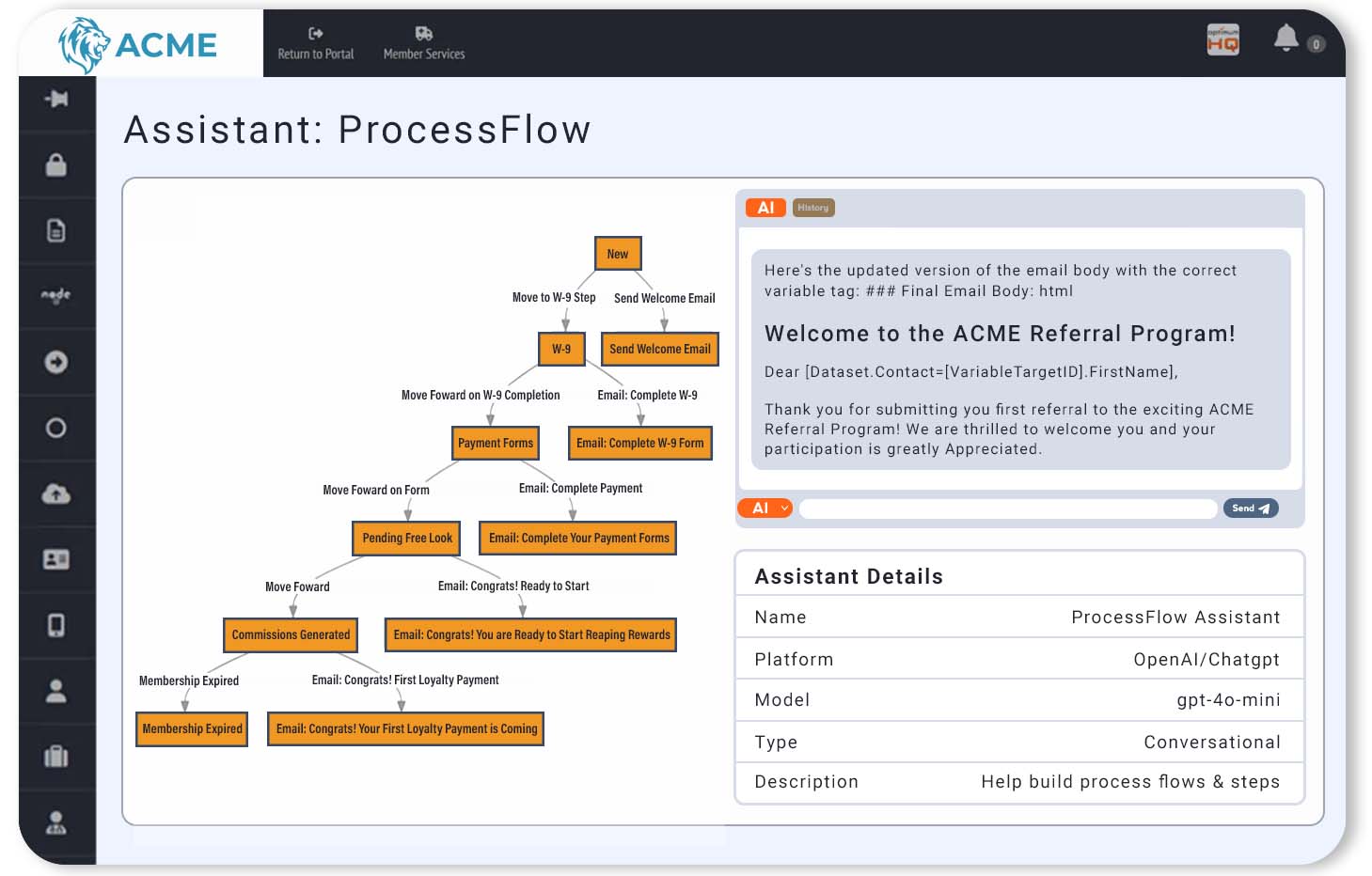
AI can optimize workflows by identifying inefficiencies, suggesting improvements, and orchestrating multi-step processes automatically. Tools like AI-powered workflow engines can route tasks based on priority, skill availability, and historical performance.
Department-Level Use Cases
Finance Operations
AI for business operations in finance helps with:
- Automated expense tracking and reporting
- Fraud detection using anomaly analysis
- Predictive cash flow management
This reduces manual errors and enhances compliance, allowing finance teams to focus on strategic planning.
Sales Operations
In sales, AI improves business operations by:
- Prioritizing leads using predictive scoring
- Automating follow-ups and reminders
- Analyzing customer interactions to identify upsell opportunities
Companies that implement AI in sales operations report shorter sales cycles and higher conversion rates.
Customer Support Operations
AI-driven chatbots and virtual assistants streamline customer support, providing:
- Instant responses to FAQs
- Automated ticket routing
- Sentiment analysis to prioritize urgent issues
This ensures faster resolution times and improved customer satisfaction without adding headcount.
Supply Chain and Inventory
AI enhances supply chain operations by:
- Predicting demand trends for inventory optimization
- Optimizing delivery routes
- Monitoring supplier performance
This reduces waste, lowers costs, and improves fulfillment accuracy.
Benefits of AI in Business Operations
- Efficiency and Cost Reduction: Automating repetitive tasks cuts labor costs and reduces errors.
- Faster Decision-Making: Predictive analytics allow businesses to act proactively.
- Improved Customer Experience: AI-powered support and personalized workflows enhance service quality.
- Scalability: Operations can handle higher volumes without proportional increases in resources.
- Insight Generation: AI uncovers trends and insights that manual analysis might miss.
Challenges and Considerations
While AI offers many benefits, companies must address:
- Data privacy and compliance concerns
- Integration with legacy systems
- Change management and employee adoption
- Ensuring AI models are unbiased and accurate
Proper planning is essential to maximize ROI while minimizing risks.
How to Implement AI for Business Operations
- Identify Key Processes: Start with high-volume or high-error areas.
- Select AI Tools: Choose AI solutions aligned with your operational goals.
- Pilot Projects: Test AI in a controlled environment before scaling.
- Train Staff: Educate employees to work alongside AI effectively.
- Monitor and Optimize: Continuously measure performance and adjust AI models.
For example, companies often integrate AI into ERP systems to streamline data flows and automate cross-department workflows using custom ERP features.
Learn more about AI in enterprise operations.
Conclusion
AI for business operations is no longer optional. By automating tasks, improving decision-making, and optimizing workflows, businesses can increase efficiency, reduce costs, and improve customer satisfaction. Implementing AI thoughtfully allows companies to scale operations, gain actionable insights, and maintain a competitive edge.
Contact Us and learn how you can get started.